
No. 1: Ah-64d Apache Longbow
Manufacturer: The Boeing
Type: Attack Helicopter
Powerplant: Two General Electric T700-Ge-701c Turboshafts
Principal Armament: One 30-mm Automatic Cannon, 16 Hellfire Anti-Tank Missiles, Seventy-Six 70-mm Folding-Fin Aerial Rockets
Maximum Cruising Speed: 165 mph
First entering service in 1984, the AH64-A Apache was America's answer to Cold War fears of a Soviet ground attack in Europe. The result? A $20 million can opener with state-of-the-art technology.
Built to endure front-line environments, it can operate during the day or night and in adverse weather using the integrated helmet and display sight system. It's also equipped with some of the latest avionics and electronics, such as the target acquisition designation sight, pilot night vision system, black hole passive infrared countermeasures and map-of-Earth navigation and GPS.
Manufacturer: The Boeing
Type: Attack Helicopter
Powerplant: Two General Electric T700-Ge-701c Turboshafts
Principal Armament: One 30-mm Automatic Cannon, 16 Hellfire Anti-Tank Missiles, Seventy-Six 70-mm Folding-Fin Aerial Rockets
Maximum Cruising Speed: 165 mph
First entering service in 1984, the AH64-A Apache was America's answer to Cold War fears of a Soviet ground attack in Europe. The result? A $20 million can opener with state-of-the-art technology.
Built to endure front-line environments, it can operate during the day or night and in adverse weather using the integrated helmet and display sight system. It's also equipped with some of the latest avionics and electronics, such as the target acquisition designation sight, pilot night vision system, black hole passive infrared countermeasures and map-of-Earth navigation and GPS.
Top Ten Helicopters

No. 2: Uh-60 Black Hawk
Manufacturer: Sikorsky Aircraft
Type: Multirole Medium Helicopter
Powerplant: Two General Electric T700-GE-701c Turboshafts
Principal Armament: Two 7.62-mm Six-Barrel Miniguns, 16 Hellfire Anti-Tank Missiles
Carrying Capacity: 11 Troops or 8,000-pound Cargo
Maximum Cruising Speed: 160 mph
Nicknamed the Night Stalker, the Blackhawk is an evolutionary airframe. With its large cabin it can fulfill a number of mission sets, including Medevac, reconnaissance, command and control, and resupply. It can also take 11 fully armed troops into battle and has the capability to carry a formidable payload of missiles, rockets, cannons and electronic countermeasures.
Of course no helicopter that goes into combat is indestructible - on Oct. 3,1993, two Night Stalkers were shot down over Mogadishu, Somalia, and the phrase "Black Hawk Down" passed into legend. As tragic as that incident was, the Blackhawk is a gritty survivor. Besides having protective armor that can withstand hits from 23-mm shells, it has an array of cutting-edge safety features
Manufacturer: Sikorsky Aircraft
Type: Multirole Medium Helicopter
Powerplant: Two General Electric T700-GE-701c Turboshafts
Principal Armament: Two 7.62-mm Six-Barrel Miniguns, 16 Hellfire Anti-Tank Missiles
Carrying Capacity: 11 Troops or 8,000-pound Cargo
Maximum Cruising Speed: 160 mph
Nicknamed the Night Stalker, the Blackhawk is an evolutionary airframe. With its large cabin it can fulfill a number of mission sets, including Medevac, reconnaissance, command and control, and resupply. It can also take 11 fully armed troops into battle and has the capability to carry a formidable payload of missiles, rockets, cannons and electronic countermeasures.
Of course no helicopter that goes into combat is indestructible - on Oct. 3,1993, two Night Stalkers were shot down over Mogadishu, Somalia, and the phrase "Black Hawk Down" passed into legend. As tragic as that incident was, the Blackhawk is a gritty survivor. Besides having protective armor that can withstand hits from 23-mm shells, it has an array of cutting-edge safety features

No. 3: Uh-1 Huey
Manufacturer: Bell Helicopter
Type: Utility Helicopter
Powerplant: One Textron Lycoming T53-L-13 Turboshaft
Principal Armament: Two 7.62-mm Machine Guns, 16 70-mm Air-to-Surface Rockets
Carrying Capacity: 11 - 14 Troops, 6 Medical Litters or 3,000-pound Cargo
Maximum Cruising Speed: 115 mph
The Bell UH-1 Iroquois, better known by its nickname the Huey, first flew in 1956 and is still in service today. Over 16,000 models have been built, the largest production run of any helicopter in history. With numerous appearances in blockbuster films and television shows, it's become an American icon.
The birth of the Huey came in the wake of the Korean War. During that conflict, the U.S. Army was learning that for rapid Medevac and troop insertion, a faster, more robust helicopter was needed. To achieve that goal, the guys at Bell developed a radically new bird that pushed the avionics envelope.
Manufacturer: Bell Helicopter
Type: Utility Helicopter
Powerplant: One Textron Lycoming T53-L-13 Turboshaft
Principal Armament: Two 7.62-mm Machine Guns, 16 70-mm Air-to-Surface Rockets
Carrying Capacity: 11 - 14 Troops, 6 Medical Litters or 3,000-pound Cargo
Maximum Cruising Speed: 115 mph
The Bell UH-1 Iroquois, better known by its nickname the Huey, first flew in 1956 and is still in service today. Over 16,000 models have been built, the largest production run of any helicopter in history. With numerous appearances in blockbuster films and television shows, it's become an American icon.
The birth of the Huey came in the wake of the Korean War. During that conflict, the U.S. Army was learning that for rapid Medevac and troop insertion, a faster, more robust helicopter was needed. To achieve that goal, the guys at Bell developed a radically new bird that pushed the avionics envelope.

No. 4: AH-1 Cobra
Manufacturer: Bell Helicopters
Type: Attack Helicopter
Powerplant: 2 X General Electric T700-Ge-401 Turboshafts
Principal Armament: 1 X M197 Three Barrel 20-mm Gun, 16 X Hellfire Anti-Tank Missiles, 76 X 70-mm Folding-Fin Aerial Rockets
Maximum Cruising Speed: 173 mph
In January 1965, Bell invested heavily on a prototype for a radically new chopper. Taking the proven transmission, rotor system and the turboshaft of the Huey UH-1, they designed a tandem-seat helicopter that had only one thing on its mind: all out attack! The Cobra went into full production just as the war in Vietnamwas expanding. The need for closer air support for troops on the ground had become a priority, and the AH-1 would fly straight into battle.


Manufacturer: Bell Helicopters
Type: Attack Helicopter
Powerplant: 2 X General Electric T700-Ge-401 Turboshafts
Principal Armament: 1 X M197 Three Barrel 20-mm Gun, 16 X Hellfire Anti-Tank Missiles, 76 X 70-mm Folding-Fin Aerial Rockets
Maximum Cruising Speed: 173 mph
In January 1965, Bell invested heavily on a prototype for a radically new chopper. Taking the proven transmission, rotor system and the turboshaft of the Huey UH-1, they designed a tandem-seat helicopter that had only one thing on its mind: all out attack! The Cobra went into full production just as the war in Vietnamwas expanding. The need for closer air support for troops on the ground had become a priority, and the AH-1 would fly straight into battle.
No. 5: Oh-6 Cayuse
Manufacturer: Hughes Helicopters and McDonnell Douglas
Type: Light Observation and Attack Helicopter
Powerplant: Allison T63-A-5a Turboshaft
Principal Armament: Two 7.62-mm Machine Guns and two 70-mm Rocket Pods
Carrying Capacity: Four Armed Troops
Maximum Cruising Speed: 137 mph
The teardrop-shaped OH-6 Cayuse was a small, sturdy helicopter with very low drag. Nicknamed the "Flying Egg," it could perform maneuvers that would leave other choppers in a spin. But being nimble means that this bird can't carry much weight, losing it marks for versatility. The Cayuse can carry a diversity of weapons, but on that small frame only a few can be taken on any single flight.
Manufacturer: Hughes Helicopters and McDonnell Douglas
Type: Light Observation and Attack Helicopter
Powerplant: Allison T63-A-5a Turboshaft
Principal Armament: Two 7.62-mm Machine Guns and two 70-mm Rocket Pods
Carrying Capacity: Four Armed Troops
Maximum Cruising Speed: 137 mph
The teardrop-shaped OH-6 Cayuse was a small, sturdy helicopter with very low drag. Nicknamed the "Flying Egg," it could perform maneuvers that would leave other choppers in a spin. But being nimble means that this bird can't carry much weight, losing it marks for versatility. The Cayuse can carry a diversity of weapons, but on that small frame only a few can be taken on any single flight.
No. 6: MI-24 Hind
Manufacturer: MIL Moscow Helicopter Plant
Type: Two-Seat Gunship Helicopter
Powerplant: Two Klimov TV3-117MT Turboshafts
Principal Armament: One YakB 12.7-mm Machine Gun, four 9M17P Skorpion Anti-Tank Missiles, twenty 80-mm S-8 Rockets
Carrying Capacity: 8 Troops
Maximum Cruising Speed: 185 mph
Nicknamed the crocodile, the HIND was a cold-blooded predator for the Cold War age. Capable of tearing through tanks, men and machinery, it saw battle on three continents and was a symbol of Soviet muscle.
Delivered to the Russian army in the 1970s, the Hind was a unique concept in helicopter design. It combined two very different roles within a single airframe, as the Hind is an attack helicopter that also has a cabin section large enough to carry troops. Think of it as what would happen if the U.S. combined an Apache with a Black Hawk.
Manufacturer: MIL Moscow Helicopter Plant
Type: Two-Seat Gunship Helicopter
Powerplant: Two Klimov TV3-117MT Turboshafts
Principal Armament: One YakB 12.7-mm Machine Gun, four 9M17P Skorpion Anti-Tank Missiles, twenty 80-mm S-8 Rockets
Carrying Capacity: 8 Troops
Maximum Cruising Speed: 185 mph
Nicknamed the crocodile, the HIND was a cold-blooded predator for the Cold War age. Capable of tearing through tanks, men and machinery, it saw battle on three continents and was a symbol of Soviet muscle.
Delivered to the Russian army in the 1970s, the Hind was a unique concept in helicopter design. It combined two very different roles within a single airframe, as the Hind is an attack helicopter that also has a cabin section large enough to carry troops. Think of it as what would happen if the U.S. combined an Apache with a Black Hawk.
No. 7: CH-47 Chinook
Manufacturer: The Boeing Company
Type: Medium Transport Helicopter
Powerplant: TwoHoneywell T55-L-712 Turboshafts
Principal Armement: Two 7.62-mm Machine Guns
Carrying Capacity: 33 - 55 Troops, 24 Medical Litters or 26,000-pound Cargo
Maximum Cruising Speed: 165 mph
The genius of the Chinook design lies in its 60-foot-long contra-rotating rotors. These eliminate the need for a rear vertical rotor, allowing all power to be used for lift and thrust. But the Chinook isn't just about muscle - this bird is fast and agile too.
First deployed to Vietnam in 1965, the Chinook CH47-A was tested to the max.
In just two years it put in 161,000 hours of flying time, carried millions of passengers and transported more than 1.3 million tons of equipment. In a single flight it could carry a platoon of soldiers into the heart of battle, and with its dual hooks hanging underneath, it fast became the king of swing
Manufacturer: The Boeing Company
Type: Medium Transport Helicopter
Powerplant: TwoHoneywell T55-L-712 Turboshafts
Principal Armement: Two 7.62-mm Machine Guns
Carrying Capacity: 33 - 55 Troops, 24 Medical Litters or 26,000-pound Cargo
Maximum Cruising Speed: 165 mph
The genius of the Chinook design lies in its 60-foot-long contra-rotating rotors. These eliminate the need for a rear vertical rotor, allowing all power to be used for lift and thrust. But the Chinook isn't just about muscle - this bird is fast and agile too.
First deployed to Vietnam in 1965, the Chinook CH47-A was tested to the max.
In just two years it put in 161,000 hours of flying time, carried millions of passengers and transported more than 1.3 million tons of equipment. In a single flight it could carry a platoon of soldiers into the heart of battle, and with its dual hooks hanging underneath, it fast became the king of swing
No. 8: Lynx
Manufacturer: Agusta Westland
Type: Light Utility Helicopter
Powerplant: Two Rolls-Royce GEM 41-1 Turboshafts
Principal Armament: Two 20-mm Cannons, two 70-mm Rocket Launchers & eightTow Missiles
Carrying Capacity: 10 Troops, or 2,000-pound Cargo
Maximum Cruising Speed: 152 mph
The Lynx's cutting-edge semi-rigid titanium rotor head makes it superbly maneuverable and very fast. In 1986, a stripped-down Lynx broke the record for the fastest speed ever achieved by a chopper, recording 249 mph.
Manufacturer: Agusta Westland
Type: Light Utility Helicopter
Powerplant: Two Rolls-Royce GEM 41-1 Turboshafts
Principal Armament: Two 20-mm Cannons, two 70-mm Rocket Launchers & eightTow Missiles
Carrying Capacity: 10 Troops, or 2,000-pound Cargo
Maximum Cruising Speed: 152 mph
The Lynx's cutting-edge semi-rigid titanium rotor head makes it superbly maneuverable and very fast. In 1986, a stripped-down Lynx broke the record for the fastest speed ever achieved by a chopper, recording 249 mph.
No.9: Bell 47 OH-13 Sioux
Manufacturer: Bell Helicopter
Type: General Utility Helicopter
Powerplant: One Lycoming V0-435-A1B 6-Cylinder Engine
Principal Armament: Two 7.62-mm Machine Guns
Carrying Capacity: 2 Medical Litters or 1,000-pound Cargo
Maximum Cruising Speed: 83 mph
The first of many U.S. Army helicopters to be named after Native American tribes, the Bell 47 Sioux was distinctive for its bubble canopy, exposed welded-tube tail boom and saddle fuel tanks. Its two-bladed rotor made a "chop-chop" sound, leading to the nickname "chopper" for helicopters. Easily recognizable for its appearances in the smash hit film and television series MASH, the Sioux earned its reputation during theKorean war -- the conflict in which helicopters first cut their teeth.
Manufacturer: Bell Helicopter
Type: General Utility Helicopter
Powerplant: One Lycoming V0-435-A1B 6-Cylinder Engine
Principal Armament: Two 7.62-mm Machine Guns
Carrying Capacity: 2 Medical Litters or 1,000-pound Cargo
Maximum Cruising Speed: 83 mph
The first of many U.S. Army helicopters to be named after Native American tribes, the Bell 47 Sioux was distinctive for its bubble canopy, exposed welded-tube tail boom and saddle fuel tanks. Its two-bladed rotor made a "chop-chop" sound, leading to the nickname "chopper" for helicopters. Easily recognizable for its appearances in the smash hit film and television series MASH, the Sioux earned its reputation during theKorean war -- the conflict in which helicopters first cut their teeth.


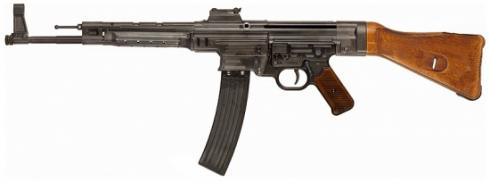

 5)FN FAL
 4)M1 GARAND
  3)LEE-ENFIELD SMLE


